Being an octopus comes with its fair share of advantages: a remarkable intelligence, the power of camouflage, and the surprising ability to squeeze through impossibly small spaces. But unfortunately for one unassuming octopus, those talents are the only thing standing between freedom and life inside a tin can.
In Darwin’s Paradox!, a new puzzle-platformer out of ZDT Studio, you play as Darwin, a little blue octopus who’s whisked away from his home in the ocean one day. His captors take him to a canned food factory called UFood that specializes in seafood. It’s up to you to help Darwin escape the factory and find his way back home by using wit and the natural talents of a remarkably versatile mollusc.
With a charming aesthetic, innovative mechanics, and action-packed gameplay, Darwin’s Paradox! is an ambitious little game with quite a lot of heart, much like its eight-armed hero. Unfortunately, that ambition sometimes outpaces its technical performance, but if you can look past occasional frame drops and stutters, you’ll find a clever platformer swimming beneath the surface.
Octopuses might not have superpowers, but it sure feels like they do in Darwin’s Paradox!. Throughout your adventure, you’ll use Darwin’s innate abilities: squirting out ink, grabbing hold of and moving objects, blending into your surroundings using camouflage, and scaling walls with sticky suction cups. As an octopus, Darwin can navigate both in and out of water, and while most abilities remain the same, they behave differently depending on where you are. Ink, for example, works as a projectile on land that affects electronics, allowing you to open doors or turn off conveyor belts, while underwater it becomes a defensive cloud that blocks enemy sightlines.
Darwin is lightning-fast in the water, jetting from one side of the screen to the next with fluid ease. Out of the water, he slows down, but that’s where his camouflage and climbing abilities come into play. Most of the game takes place in or around the factory, but it successfully incorporates enough water to switch between the playstyles so you get both slower-paced puzzles and action-packed chase sequences.
There are nearly 50 chapters in the game (many of them very short), and they’ll test your mastery over Darwin’s abilities as you sneak around, solve puzzles, and run from speedy threats—and, boy, are there a lot of threats. From aliens in robot suits, to hungry barracudas, to Steven the Seagull and all of his doofy cousins, there are a lot of creatures that either want to eat, squish, or simply ruin Darwin’s day, and that’s not even counting all the environmental hazards littered around the factory.
The biggest hazard, though, isn’t to Darwin; it’s to you, the player. Performance issues mar the gameplay experience, with frequent frame drops or stutters. Most of my time with Darwin’s Paradox! was on Steam Deck, though I also played on my ASUS TUF Gaming A16 laptop and my gaming PC—the latter of which is, admittedly, getting older with its 2080 Super graphics card and i5-12600k CPU. But of the three, my desktop ran the game the best, with the least amount of performance issues. I never experienced any crashes on any of the devices, though I had to sacrifice graphics for performance on all three.
It’s a shame, too, because the game’s graphics are downright adorable. The game’s animations and character designs have a charm reminiscent of a Pixar film, giving the entire experience a polished, cinematic feel. Environmental details—like hanging signs on the factory wall or random background items—add a surprising amount of personality to the industrial factory, quietly building out the world without much need for dialogue. And as a game starring an octopus, there isn’t much dialogue outside of a short cinematic at the game’s start.
Notably, Darwin’s Paradox! features a 2.5D graphics style. Movement remains largely on a 2D plane, though the environment features elements either in the foreground or background that add dimension to Darwin’s surroundings. Occasionally, these elements created some confusion with platforming; a ledge might appear like you could jump on it when really it was a foreground object there for aesthetic purposes. Mostly, though, the 2.5D style made for a gorgeous, rich environment full of minor details worth paying close attention to.
The majority of the game’s world-building comes from its environmental storytelling or collectibles system called “Discoveries,” which reveals bits of lore about the factory and its occupants. Unfortunately, that’s about where the storytelling ends. Darwin’s Paradox! doesn’t really build toward larger narrative beats, and your goal rarely changes other than just “escape.” Each level introduces new obstacles or tools you can use to your advantage—including maze-like vents, glowing goo that scares away red-eyed rats, and aggressive anglerfish lurking in the dark—but the overall structure remains largely the same. A few mini-boss encounters or stronger narrative moments between sections might have helped create a greater sense of progression as you dive deeper into the factory.
Even so, the game rewards curiosity quite often. Darwin’s Paradox! encourages exploration through hidden Discoveries and the occasional bizarre encounter tucked away off the main path (if a sign says “Do not trespass,” you should most definitely trespass). The level design doesn’t hide quite as many secrets as a fellow platformer like MIO: Memories in Orbit, though it offers enough surprises that I frequently risked Darwin’s life by poking into corners or slipping past unexplored doors just to see what might be waiting at the end of a corridor. Sorry, Darwin!
All told, Darwin’s Paradox! took me a little less than 10 hours to complete. It rarely became difficult, though a few levels slowed me down along the way. Ultimately, the game’s biggest obstacle isn’t its design but its technical performance. If you can tolerate the occasional stutter or frame drop, there’s a clever, charming puzzle-platformer underneath it all.
The post Darwin’s Paradox! review – A charming puzzle-platformer but with slippery performance appeared first on Destructoid.
The Play It Your Way update has dropped in PEAK, and it completely introduces the way we have played the game so far. If you felt that the general gameplay was a hard challenge, it all changes now. This guide will give you a quick overview of all the major changes and what you can expect from the patch.
Complete PEAK Play It Your Way update patch notes
Here’s an overview of all major changes made as part of the new patch.
Custom Runs
You can completely change how runs worked so far in PEAK. You can make them as easy or hard as you want. You can also choose which tools to spawn with and what kind of hazards you can encounter on your run. You can also tweak how the environmental hazards work and how severe/relaxing their effects are.
Mini Runs
If you don’t have time for a full-scale adventure, you can try out Mini Runs. They will allow you to play a single biome of the daily map. These quick runs can be quite intense without being unnecessarily long.
Campfire Autosaves
It’s now easier to pause and resume our adventures without losing much progress. All you need to do is reach a campfire. You’ll be able to save all your progress automatically by accessing a campfire, and you can quit. You can later resume the adventure from the autosave, and this works until you win, lose, or begin a fresh run.
Additionally, you can hang out at a campfire without any hunger or fog progression. It will only extinguish after the scout leaves.
Zombie Phobia mode
If you hated the zombies, you can now disable them completely on Custom Runs. However, you can also use the Zombie Phobia mode to make things less graphic if you want.
Here are some minor changes that are part of this patch.
- Achievements that need to be done in a single run will now maintain their progress if a player disconnects/reconnects (such as Gourmand or Mycology badges)
- Fixed a long-standing issue where interacting with a rope shooter’s rope immediately after it was fired could cause a division by zero, causing chaotic behaviour, including locking the player’s controls or sending them to the void.
- Fixed issue where sometimes scouts would not revive when reconnecting in cases where they should have.
- Made the endgame scout report work properly after disconnecting and reconnecting to a game.
- Audio sliders and kick button will now show up immediately when a new player joins without needing to re-open the menu.
- Scouts that were skeletons when they disconnected will still be skeletons when they reconnect.
- Fixed a bug where Player 3 and Player 4 would spawn in the same location.
- Rescue Hook now doesn’t put you in a ragdolled state for as long, making it easier to use.
The post PEAK Play It Your Way update patch notes: Biggest changes and more appeared first on Destructoid.
Recommended Story For You :
Think of it as a GPS system for World of Warcraft

FIFA 2023 ULTIMATE TEAM MILLIONS MADE EASY
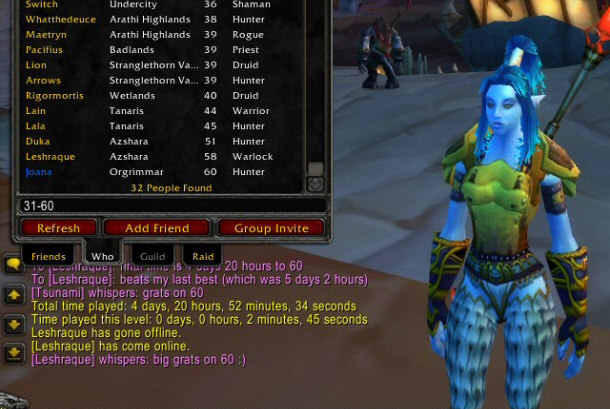
Joana's Clssic WotLK 1-80 & Era 1-60 Speed Leveling Guides

Empowering Gamers with the Ultimate Secret Gold Guide
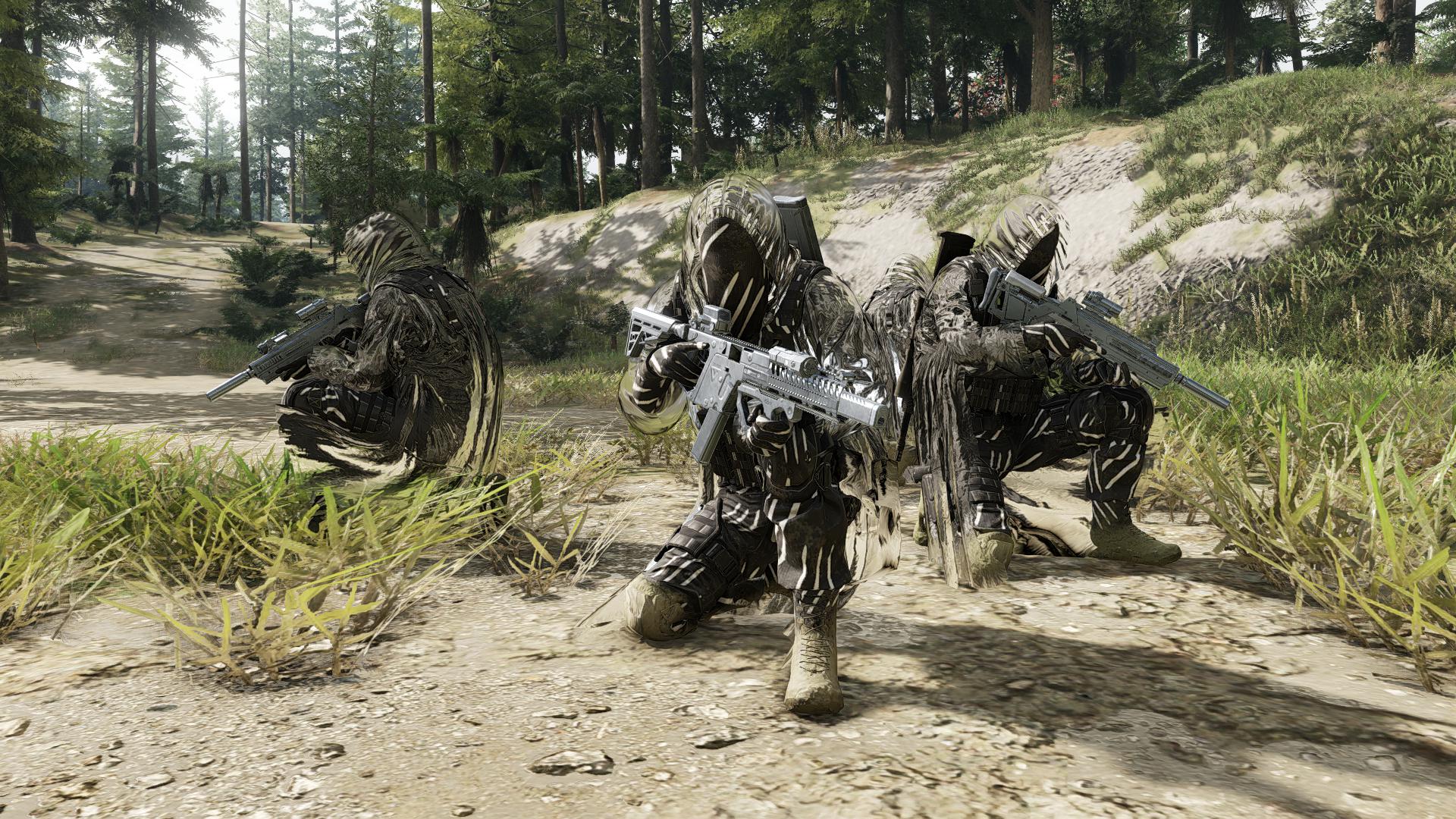
A Practical Guide For Tactical Gaming

Terra Game - Where Adventure Awaits!