An up-to-date list of the most viral songs and sounds on TikTok in May 2026 — and how to use them to boost your content.
If you create content in any format, you know it involves a lot of writing: creating outlines and scripts, writing social media captions, brainstorming ideas, repurposing content, and more. AI writing tools can make these tasks a whole lot easier.
Sure, these tools might not be able to provide publish-ready drafts with a single prompt. AI tools can’t replicate your voice, your perspective, or the lived experience that makes your writing feel distinctly human. However, they can offer an excellent starting point, so you aren’t battling blank page syndrome every day.
Speaking of battles: finding the right AI writing tool for you is easier said than done. We’re spoiled for choice now, and it’s tricky and time-consuming to figure out which tools are worth your time and money.
As a professional writer and social media creator, I’ve done the work for you. I’ve handpicked some of the best AI writing tools in the market for creators, small business owners, and marketers. Every tool here gets an honest review — no affiliate links, no paid placements. I do mention Buffer’s own AI assistant, and yes, I’m a little biased, but I think you’ll see why.
In this article, we’ll take a deep dive into my favorite AI writing tools and who I think they’ll be most useful for.
Key takeaways
- AI writing tools are best used as sidekicks to overcome writer's block and generate outlines, rather than as total replacements for human creativity.
- Top picks: In my experience, Buffer is best for social media, Claude for deep reasoning, and Koala for SEO-focused content.
- When choosing a tool, things to look for include ease of use, cost-to-ROI ratio, and how well it integrates into your existing workflow.
- Even professional writers use AI to refine ideas and optimize for search, but always maintain a "human-in-the-loop" process for final drafts.
Jump to a section:
- Why choosing the right AI writing tool matters
- How I chose the best AI writing tools on this list
- What’s the difference between an AI model and an AI tool?
- What should I look for when choosing an AI writing tool?
- How I use AI in my work
- The best AI writing tools
- Writer's block be gone
- FAQ about AI writing tools
- More AI tools and resources
Why choosing the right AI writing tool matters
Up until a few years ago, AI writing tools were a rare commodity. Today, they’re built into nearly every app you already use. From Google Workspace to Notion, every software has launched its own AI writing assistant.
Many of these tools might use the same AI writing model underneath (like OpenAI’s GPT or Anthropic’s Claude). But they’re not built the same. The difference comes in the interface, workflows, and ease of use. These tiny tweaks can either make an AI tool a great sidekick or just another unhelpful tab on your browser.
So, instead of focusing on the most popular apps, we’ve focused on finding the most useful AI writing tools for you. AI writing assistants that help you spend less time formatting, fiddling, or fighting writer’s block and more time actually writing.
If you’re feeling overwhelmed by all the options out there, I hope this breakdown helps you find something that fits your workflow and your brain.
How I chose the best AI writing tools on this list
While evaluating several AI writing tools in the market, here’s what I was looking for:
- Cost: Many popular large language models (LLMs) are free to use, so a paid AI writing tool needs to earn its price tag. If a tool is just building on top of ChatGPT, I’ve examined whether its additional features are actually worth the money. If you can do the same tasks (albeit with more time) using ChatGPT for free, that tool didn’t make the cut.
- Ease of use: No one wants to spend hours learning how to use an AI tool effectively. The faster you can get an AI writing assistant up and running, the better. Note that this doesn’t include prompting because it’s a different skill altogether. The tool should be able to understand the prompts clearly, yes, but giving clear, detailed prompts to get the best output possible is on you.
- Customizing tone options: Everyone has their unique style of speaking, whether that’s a creator or a brand. I’ve prioritized tools that offer solid customization options, so you can shape each output to sound as close to ‘you’ as possible.
- Content variety: Creators and marketers must write a diverse range of content, including short-form content such as ad copy or captions, product descriptions, newsletters, blog posts, and more. I’ve included tools that can create various types of work-related writing.
- Output quality: We can’t expect the AI generator to be perfect, but it should cover the basics — accurate grammar checking, minimal fluff, and basic editing options like shortening or expanding text — to ensure quality. Note that many AI writing tools are built on the backs of the most powerful LLMs (ChatGPT or Claude), so the output quality will only have so much difference.
- Privacy: I’ve chosen AI writing tools that are upfront about how they handle your data. Some tools use their own proprietary models designed with compliance in mind. Others rely on third-party models but offer settings to keep your prompts private. If data security is a concern for your team, check each tool’s privacy policy in more detail before using it.
- Integrations: The best AI writing tools fit into your existing workflow instead of forcing you to build a new one. Whether it's a browser extension, a plugin for your favorite writing app, or a direct connection to your social media scheduler, seamless integrations can save you a lot of copy-pasting and tab-switching.
- Originality: With so much AI-generated content out there, it's worth checking whether a tool has built-in plagiarism or originality features, or at least pairs well with a separate checker. This is especially important if you're publishing content at scale and need to make sure every piece is unique.
I’ve also highlighted how many AI writing tools use GPT or Claude to power their tool. If that makes you slightly confused, you’re not alone. The next section will help you understand the difference between an AI model and an AI tool more clearly.
What’s the difference between an AI model and an AI tool?
An AI model is the underlying core technology — think of it as the engine under the hood. AI models are trained on massive datasets and learn patterns, relationships, and logic to perform tasks like text generation. For example, GPT-5.5 is an AI model that powers ChatGPT, and Claude Opus 4.7 is an AI model that powers Claude.
AI tools, on the other hand, are the apps you actually interact with. They take an AI model and wrap it in a specific interface, workflow, or set of features designed to make a particular task easier.
Here’s a quick way to think about it: the AI model is the engine, and the AI tool is the car you’re driving. Two cars might have the same engine, but the driving experience can be completely different. That’s why many tools on this list use GPT or Claude under the hood but still feel distinct from one another.
What should I look for when choosing an AI writing tool?
Here are some factors you should consider before investing in an AI tool:
- Does it provide value for money? The content creation capabilities of a tool should make you more productive without costing you a fortune. Evaluate if the feature set is worth the price for your use case.
- Does it mesh seamlessly into my workflow? AI writing tools should become a part of your writing process without too much friction. The right tool will be intuitive to use and offer plenty of workflows or templates that fit your needs. It might also integrate with the writing tools you already use.
- How is the writing quality and style? AI-generated content can’t be perfect, but pick a tool that can come as close to publish-ready as possible. Many tools will have the capabilities to customize text to your brand style and voice. Some tools will also have reviews about excelling in specific types of content, such as academic writing or fiction.
- Does it integrate with the tools I already use? An AI writing tool is only as useful as it is accessible. If you’re already working in Google Docs, Notion, or a social media scheduler like Buffer, look for tools that plug into your stack, whether through browser extensions, native integrations, or a simple copy-paste workflow. The less friction, the more likely you’ll actually use it.
- Does it have your must-haves? If your main goal is social media content, look for a tool that understands platform nuances. If you’re creating longer content like newsletters or blog posts, prioritize tools that can match your tone and keep things consistent across formats.
How I use AI in my work
When AI writing assistants came on the horizon, I’ll admit I was a skeptic. But things moved fast, and I’m glad I came around because these tools have genuinely changed how I work. And thank goodness for that, because I’ve really come to love my AI tools now.
One thing worth knowing: I’ve never published fully AI-generated content — not for clients, not in my own work. Buffer takes the same approach: AI is a tool, not a ghostwriter. Humans are always a crucial part of the process everywhere Buffer publishes content, whether that’s on the website, social media, blog, newsletter, or videos. (Learn more about how the Buffer content team uses AI.)
There are a thousand different ways to use AI in your content creation process. Here are the most common ways I use it:
- Come up with ideas for articles and social media posts (especially when I’ve been staring at a blank doc for too long)
- Get suggestions for rephrasing a sentence that’s too long or complicated
- Spot areas where I can use specific keywords to optimize articles for search
- Search the web to understand what my target audience is saying in niche communities (Reddit, forums, comment sections; the works)
- Ask for feedback to understand whether or not I’m meeting the search intent for an article
- Refine the conversations I have with subject matter experts for my articles to extract the best quotes
AI tools have become a new addition to our workflows, and a valuable one at that. None of the tools here is perfect, but they all earned a spot because they save time, reduce friction, and help get words on the page faster.
The best AI writing tools
I’ve numbered this list for convenience rather than ranking. All these AI writing tools serve fairly different purposes, and I’ve included an ideal use case for each.
Here's a quick summary:
| AI tool | Best for | Starting price |
|---|---|---|
| Buffer AI | Social media content and scheduling | Free / $6 per channel |
| Claude | Structured writing and reasoning | Free / $20 per month |
| Jasper | Marketing teams and campaigns | $69 per month |
| Wordtune | Polishing and paraphrasing | Free / $6.99 per month |
| Lex | Professional copy and editing | Free / $24.99 per month |
| Koala | SEO articles | $9 per month |
| Sudowrite | Creative writing and fiction | $19 per month |
| Type | Long-form professional drafts | $12 per month |
| ChatGPT | Conversational and fast writing | Free / $4 per month |
1. AI Assistant in Buffer
Best for social media content
Price: Forever-free version available. Paid plans begin at $6/month/channel.
Buffer’s AI assistant is custom-built for social media. The best part is it’s built right into your social media workflow. If you’re using Buffer as your one-stop tool for all things social media, you can use the AI assistant to create content (or refine it) for various platforms simultaneously. No more copy-pasting when you’re crossposting.
Buffer’s AI is also smart enough to pick up on the nuances of all social channels. Unlike many other tools, you won’t have to tell it to remain within the character limit for X or sound more professional for LinkedIn and playful for Instagram. It’ll do that automatically, like magic.
The editing features within the assistant are also huge time-savers. Instead of giving prompts to make your content shorter, longer, casual, etc., you can just use the dedicated buttons and get the content you’re after in one click. And yes, these buttons also work for certain sections of the text if you don’t want to rewrite the whole post.
And these are just the fundamentals. Here are some more advanced use cases, especially for social media:
Personalized post ideas
If you’re in an idea block, you can use Buffer’s AI assistant to generate ideas, too. To get a better sense of what is going to resonate with your audience, the assistant will ask you two things:
- What is your business about?
- Who is your target audience?
From there, the assistant will generate a stream of ideas for you to assess, one at a time. On each one, you’ll be able to hit Use it, which will open a pre-filled post creation window, or Try Another to regenerate.
I use this feature all the time when I’m stumped for time but want to maintain my posting streak (another very cool Buffer feature). Some of my best-performing posts initially began as an idea seed given by Buffer. How cool is that?
Repurpose old posts and content
Another essential part of any social media strategy is repurposing the content you create. Buffer’s AI assistant does that, too. You can prompt it to repurpose posts that have performed well or rewrite them to be more appropriate for another platform.
Free and limitless on all Buffer plans
Unlike many other AI writer tools, especially those built for social media, there’s no ‘credits’ system in place. The AI Assistant is free to use, as is Buffer (for up to three channels). Submit as many prompts and rephrases as you like — there’s no cap.
Bonus: no-sign-up-required Social Media Post Creator
You don’t need to be a Buffer user to use the AI Assistant. With the free Social Media Post Creator, you can take the tool for a test run (or use it indefinitely) without creating an account or sharing your email address.
2. Claude
Best for structured writing that requires deep reasoning
Price: Free plan available. Paid plans start at $20/month.
Claude is the one writing software I use nearly every day. If you compare it to ChatGPT for basic tasks such as brainstorming title/post ideas or refining short-form content like emails or copy, there’s not a major difference in the output.
You might find ChatGPT’s writing style to be more polished and prim, while Claude’s is more relaxed and conversational, but even then, the difference isn’t too obvious.
However, the difference is stark in tasks that require a strong contextual understanding or reasoning. Claude, in my experience, is better at parsing complex ideas than any other AI writing tool I’ve tried. It’s particularly strong for long-form writing like blog posts, in-depth articles, and even YouTube scripts where the output needs to sound natural and hold together across thousands of words. It’s also one of the best tools to generate ideas and makes for a great brainstorming partner.
Claude is also a good editor. I often use it to identify gaps in my arguments and areas where my content lacks depth. It can adhere to a brand voice if provided with proper prompts. In contrast to ChatGPT, I prefer giving detailed prompts to Claude to get the best results.
3. Jasper
Best for marketing teams
Price: Plans begin at $69/month/seat. 7-day free trial available.
Jasper is an all-in-one AI marketing tool that also has built-in writing features. It was one of the early players in AI writing and has since grown into a full suite of features built specifically for marketers.
- Write anything and everything under the sun, from product descriptions, to blog posts, landing pages, product feature updates, press releases, media pitch emails, and more.
- Collaborate with your team by jumping into shared documents and viewing projects and campaigns at a glance with Kanban and calendar views.
- Refine any marketing copy using Jasper Chat. It’s trained on marketing use cases and personalized brand guidelines.
- Generate text and images that complement your content.
4. Wordtune
Best for polishing your writing
Price: Free plan available with a limit on the rewrites, suggestions, and generations. Paid plans begin at $6.99/month.
Wordtune is the perfect writing assistant if you need a tool to polish your writing rather than generating ideas. It’s one of the tools I’ve been using every week for months, simply because its output is better than that of several other tools I’ve tried.
You can use it to:
- Paraphrase your writing.
- Check your content for typos and grammar.
- Rewrite or create any form of content in a different tone.
5. Lex
Best for writing pros
Price: Free version available with the basic AI models. Paid plan costs $24.99/month.
Lex is one of the simplest and smartest AI writing tools. I think of it as the Google Docs 2.0 — it looks and feels similar (so getting yourself familiar is quick and easy), but does everything better.
Lex is first and foremost a tool for creating copy. It might not have all the bells and whistles that the others have, but what it does, it does exceptionally well. It’s also got some lightweight formatting options and collaboration tools (comments, sharing, read-only links, etc.).
Yes, you can use prompts to generate drafts, just as you would with any AI writing tool. But where Lex really shines is in editing and refining your work. It's a bit like having an AI editor to work with you.
⚡️ Try Lex for free.
6. Koala
Best for writing SEO articles
Price: Paid plans start at $9/month. Free trial available for 5,000 free word credits and 25 free chat credits.
Koala uses the ChatGPT and Claude models to help you create SEO articles. It also has a deep research feature to create factual content. Here are some cool SEO features in Koala:
- Add an FAQ and key takeaways section to make your article more readable.
- Automatically add internal links to your articles to improve your SEO architecture.
- Analyze the top ranking results and includes keywords strategically in your articles.
- Generate and edit outlines to optimize them well before generating complete articles.
- Maintain consistent brand voice by using your customized brand tone guidelines and terminologies.
7. Sudowrite
Best for creative writing and fiction
Price: Plans start at $19/month for 225,000 credits. Free trial available with 10,000 credits.
If you’ve been meaning to write a novel for years, Sudowrite may soon become your new best friend. Not only will Sudowrite help you generate ideas and write stories for the characters you’ve had floating around in your head for years, but it’s also an AI-powered project management tool of sorts specifically designed for fiction writers. Sudowrite has its own AI model (called Muse) built specifically for writing fiction.
Here’s what makes it stand out for creative writers:
- Generate sensory descriptions (sight, smell, taste, touch, sound) to bring scenes to life.
- Develop characters, plot arcs, and world-building details with AI-guided story tools.
- Organize chapters, timelines, and story notes in one place.
- Get "show, don't tell" feedback to strengthen your prose.
8. Type
Best for editing long-form professional writing
Price: Plans start at $12/month. Free trial available with limited features and the basic AI model.
Type excels at long-form writing and has three core features in its writing assistant:
- Generate the first draft of an article, ebook, or any other long-form content.
- Edit a draft you’ve already worked on (whether it’s live or in a doc).
- Chat with Type to spark ideas.
9. ChatGPT
Best for faster and conversational writing
Price: Free version available. Paid plans begin at $4/month.
It’d be remiss of me not to mention the tool that (kinda) put AI writing on the map: ChatGPT. Even ChatGPT’s free version is great for most tedious tasks related to writing. I use it to polish my title ideas, simplify complex sentences, and come up with synonyms for words I keep repeating too often.
ChatGPT, a chatbot based on OpenAI’s GPT model, is what many of thefeature-packed tools above are built on and what helps generate the copy that lands in their fancy interfaces.
Writer’s block be gone
We’ve all been there, staring at the blinking cursor like it personally offended us. AI writing tools can’t create ideas out of thin air, but they certainly make getting started a whole lot easier.
And writer’s block is a particular pest in the social media world (probably because you have to create so! much! content! for various platforms). If that sounds familiar, Buffer’s AI assistant might be worth a look. You can generate ideas, draft whole posts, or repurpose content for different channels, all without leaving your publishing workflow. No new tabs to juggle, no credits to worry about. Just a little help getting words on the page when you need it most.
Try Buffer’s free-forever plan.
FAQ about AI writing tools
Is ChatGPT an AI writing tool?
Yes, ChatGPT is an AI writing tool that can help with a variety of writing-related tasks, such as writing emails, social media posts, blog posts, ads, and more. It’s built on a large language model created by OpenAI.
That said, it’s always a good idea to have a human review and edit content from any AI writing tool. Think of it as a solid first draft that still needs your voice, your eye for accuracy, and your judgment on tone.
Are AI writing tools free?
Yes, several AI writing tools offer free plans or trials. ChatGPT and Claude both have free tiers, though they limit usage and restrict access to newer AI models. Upgrading unlocks faster models and higher limits.
If you’re focused on social media, Buffer’s AI assistant is free on all plans — including the forever-free plan — with no credit limits. You can generate ideas, write posts, and repurpose content across platforms without paying a thing. Paid Buffer plans start at $6/month per channel and unlock additional scheduling and analytics features.
For most other tools on this list, free trials run anywhere from three to 14 days, after which you’ll need a paid plan to keep going.
Which AI tool is best for writing?
There’s no single ‘best’ AI tool for writing; it all depends on your needs and budget. Popular choices include ChatGPT for day-to-day writing, Claude for structured writing that requires reasoning and nuance, Buffer for writing anything about social media, Jasper for marketing teams, Koala for SEO content, and Sudowrite for writing stories or fiction.
Can AI writing tools be detected?
Most AI detection tools can flag content that’s heavily generated by AI, especially if it hasn’t been edited much. The more you refine AI output in your own voice, the harder it is to detect. That said, no detection tool is perfectly accurate. Some flag human-written content as AI; others miss AI content entirely.
The safest approach: treat AI as a starting point, not a finished product. Edit the output, add your own perspective, and fact-check before publishing. That’s good practice regardless of detection, and it’s how the Buffer content team approaches AI-assisted writing, too.
More AI tools and resources
- The 9 Best AI Image Generators (+ Examples)
- 14 AI Tools for Social Media Content Creation: My Workflow Guide
- How AI Dictation Tools Changed The Way I Work (And Which Ones Are
- AI Emails Me Content Ideas Every Morning — Here’s How That System Works
- 8 of the Best AI Productivity Tools to Help You Optimize How You Work
- The 11 Best AI Video Editors for Creators and Marketers, Tried and Tested (+ Bonus AI Tool)
Recommended Story For You :
Organize Keywords and Import CSV Files from the Google Keyword Planner
The Most Affordable And Easiest User Friendly Page Builder You Will Ever Use!

Instant WordPress Theme That Matches Your Website
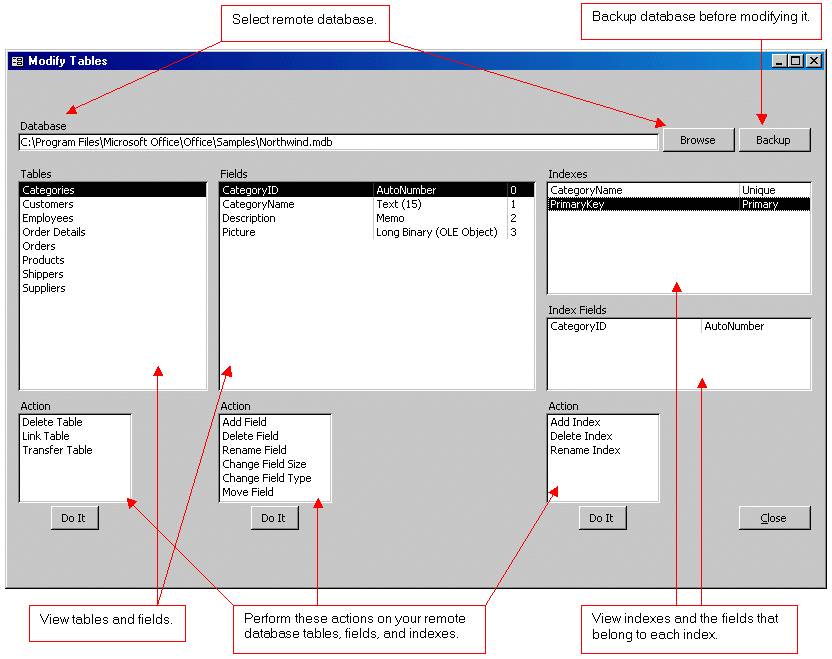
Wizard to Manage Remote Backend MS Access Database Tables Fields and Indexes

If you had an aisle-by-aisle grocery list wouldn't you spend less money on impulse items?

everything you need to create a professional corporate look mini-site is there.

Unlock Your Networking Potential with GNS3Vault
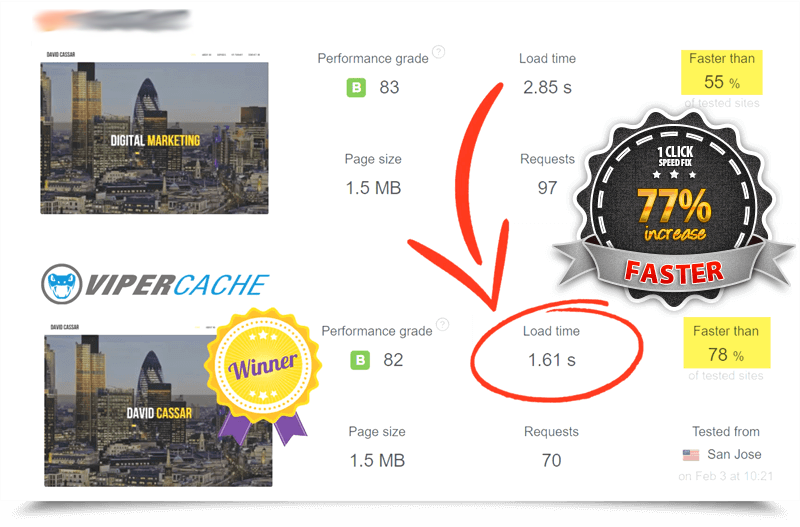
Viper Cache Was 77% Faster Than The Competetion

Understanding Stock Market Shorting eBook