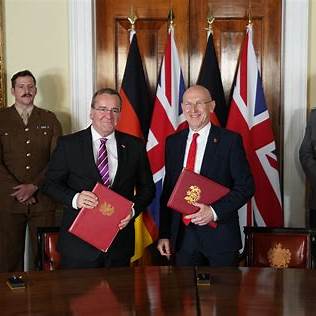
UK–France “One In, One Out” Migrant Return Deal: Deep Dive
Overview: Reversing the Flow

UK–France Migrant Return Deal. The UK and France are developing a “one‑in, one‑out” migrant return deal, a pilot policy where for every illegal Channel migrant the UK returns to France, France would allow one legal migrant with family links to enter the UK. The goal: to deter small-boat crossings and create a structured, safer migration pathway reuters.com+15thetimes.co.uk+15morningstar.co.uk+15.
Negotiations have been in the spotlight as part of President Macron’s state visit (8–10 July) and during a bilateral summit with Prime Minister Starmer thetimes.co.uk+4theguardian.com+4thesun.co.uk+4. Her Majesty’s Government hopes the deal will shift the incentives away from perilous journeys, but complex legal, political, and procedural hurdles remain.
🔢 The Numbers Driving the Deal
-
Over 20,000 migrants have crossed the Channel in the first half of 2025—a 48% increase from 2024 the-independent.com+7ft.com+7thetimes.co.uk+7lbc.co.uk+15theguardian.com+15thetimes.co.uk+15.
-
Weekly figures are stark: in late June, 703 reached UK shores while only 191 were intercepted by French authorities thesun.co.uk+5thesun.co.uk+5thescottishsun.co.uk+5.
-
Daily peaks hit 879 crossings on 30 June thesun.co.uk+1thescottishsun.co.uk+1.
Despite the UK’s investment of roughly £480–500 million in French patrols, drones, and quad bikes, enforcement remains low—interception rates hover under 40% theguardian.com+6thesun.co.uk+6thescottishsun.co.uk+6. The scale of arrivals has fueled political pressure to find a more effective deterrent.
🛠 Mechanics of the Proposal
-
Returns: Asylum seekers arriving via small boats are swiftly returned to France—ideally within weeks.
-
Arrivals: An equal number of vetted migrants with genealogical ties to the UK would enter legally, likely via French processing hubs telegraph.co.uk+4thesun.co.uk+4thesun.co.uk+4reuters.com+12migrationpolicy.org+12reddit.com+12.
-
French operational shift: New rules may permit interception up to 300m offshore, using jet skis and propeller‑disable nets, even absent immediate peril reuters.com.
Implementation would rely on joint UK‑France processing centres and potentially a Eurodac‑Lite system for biometric checks to prevent double entries the-independent.com+6migrationpolicy.org+6thetimes.co.uk+6.
🏛 Political and Legal Issues

🌍 EU Member State Pushback
Five southern EU nations—Italy, Spain, Greece, Malta, and Cyprus—warn that the bilateral deal risks displacing migrants to front-line states, akin to the 2016 EU‑Turkey swap theguardian.com+7ft.com+7thetimes.co.uk+7. They’ve petitioned the European Commission, demanding clarity on legal and redistribution implications .
🕰 UK Opposition
The Conservative Party and Reform UK branded the concept a “gimmick”, arguing it doesn’t stop crossings and pushing for harsher responses, such as reinstating the Rwanda deportation policy thetimes.co.uk+6thesun.co.uk+6thescottishsun.co.uk+6. Shadow Home Secretary Chris Philp echoed this sentiment, calling the plan “pathetic” lbc.co.uk+4morningstar.co.uk+4thesun.co.uk+4.
🇫🇷 French Operational Hurdles
While France is willing to strengthen coastal enforcement, extending actions offshore may require new legal authority and resources. Previously, French police were only allowed to act when lives were directly endangered. The BBC-filmed scene of police deflating a dinghy spotlighted both symbolic intent and restrictive scope thesun.co.uk+1thescottishsun.co.uk+1.
🎯 What the Deal Aims to Achieve
-
Reducing incentives for dangerous crossings: By tying departures to returns, the logic is that migrants won’t risk boat journeys if they know they’ll simply be sent back .
-
Pilot-and-scale model: A phased rollout aiming for demonstrable early impact before expansion migrationpolicy.org.
-
Targeted legal pathway: Prioritizes family-reunification cases, maintaining humanitarian obligations telegraph.co.uk+8migrationpolicy.org+8morningstar.co.uk+8.
🔍 Challenges and Risks
-
EU legal fragmentation: Without EU endorsement, France may still repatriate UK-returnees to other EU countries under Dublin rules, burdening front-line member states ft.com+1migrationpolicy.org+1.
-
Logistical demands: Creating joint processing hubs, enabling biometric checks, training border forces, and establishing rapid return infrastructure—all within months—poses logistical challenges thesun.co.uk+3migrationpolicy.org+3thetimes.co.uk+3.
-
Monitoring and enforcement: Ensuring migrants aren’t intercepted then reattempt crossings from other entry points is operationally complex.
-
Diplomatic vulnerability: The deal is fragile, reliant on political will amid pressure from EU partners and internal UK splits on immigration.
✅ Early Signs and Developments
-
Earlier in June, France announced intention to allow interception of boats up to 300m offshore, a significant policy shift from only intervening near shore thetimes.co.uk+8reuters.com+8lbc.co.uk+8.
-
Yvette Cooper and French officials have highlighted recent efforts—e.g., slashing dinghies, using jet-skis, deploying nets—as signs of growing cooperation thescottishsun.co.uk+5theguardian.com+5thescottishsun.co.uk+5.
-
Yet, interception levels suggest effectiveness remains below expectations, spurring the search-for-deal urgency .
🕰 Timeline & Political Milestones
-
Pilot phase slated for launch August–September 2025, assuming Macron’s July visit and summit deliver an agreement thetimes.co.uk+3thetimes.co.uk+3the-independent.com+3.
-
Frameworks for joint processing, biometric checks, and repatriation protocol are targets for bureaucratic finalisation.
-
The pilot will be monitored before contemplating expansion or seeking a full EU‑scale deal.
🌐 Broader Implications
-
UK–EU relations: The bilateral nature signals a pivot away from wholly EU-level migration strategies—potentially fracturing cohesion .
-
International precedent: If successful, the model could spread: Italy or Spain might mimic the framework with North African countries.
-
Smuggling networks: Disrupting the Channel pipeline may force smugglers to find new routes or face diminishing business prospects.
✅ Final Reflection

The UK‑France one‑in, one‑out pilot is innovative yet unproven. It seeks to balance deterrence via returns with managed legal access, while the political and operational outlook remains uncertain. The success depends on whether:
-
France actually intercepts the boats at sea.
-
return processes are swift and legally sound.
-
EU member states don’t undermine France through secondary returns.
-
both governments can withstand domestic backlash or opposition pressure.