In 2021, a number of Apex Legends developers departed from Respawn Entertainment to go out on their own and start something new.
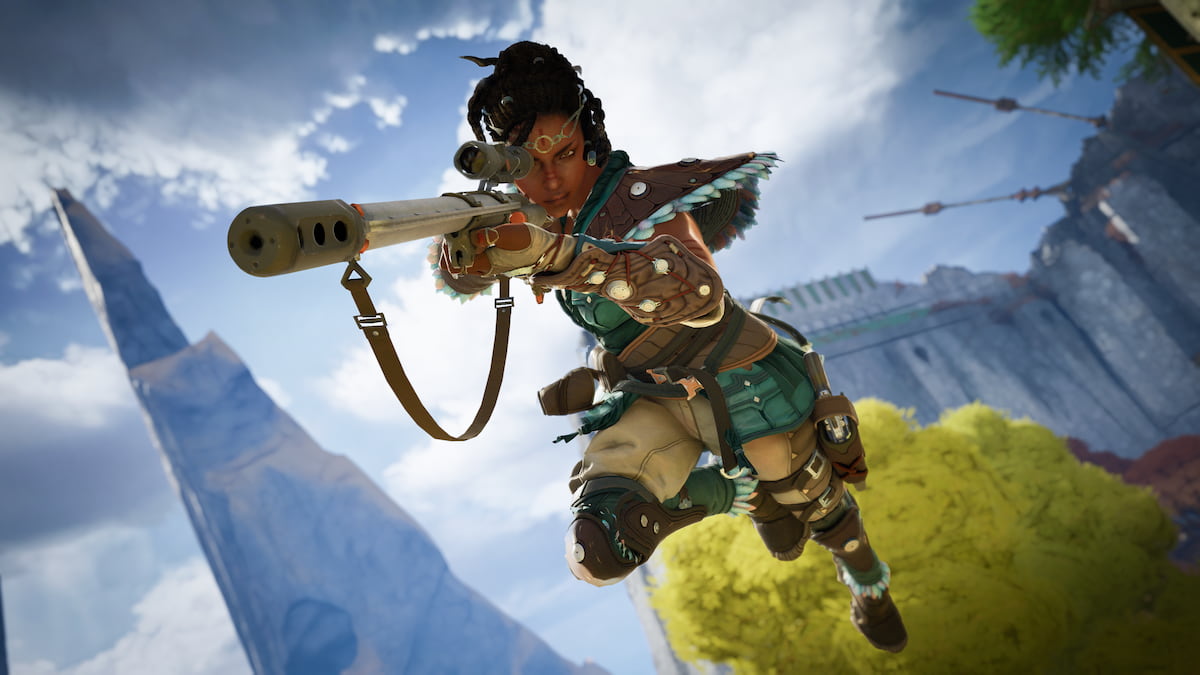
That something new is Wildlight Entertainment, and the studio’s first game is finally here several years later. Highguard, Wildlight’s free-to-play, three-vs-three hero shooter (they call it a “raid shooter” because of its unique mechanics), made some unfortunate waves with its less-than-stellar debut trailer at The Game Awards and subsequent silence on social media afterwards. But the game is finally here now, and I think it’s legit. I played it last week at a special event in Los Angeles, and also tried to find out more about its development.
Quite a few other former Respawn devs joined along with Welch and Grenier to help build out Wildlight, and so Apex’s DNA can be felt throughout the base gunplay, but it’s also something entirely new, and built for success as a game as a service (GaaS). That’s because, as VP of product and publishing/game writer Jason Torfin and lead designer Mohammad Alavi told those of us on hand, it’s been built for the long haul with a lot of experience behind it.
“We know the live-service shooter space is super crowded and everyone has the ‘forever game,’ and we want to make sure that we’re building a game that you want to come back to regularly with your friends that has the strategic depth, the constant innovation that keeps pulling you in,” Torfin said.
As far as what the studio has learned about how to run a live-service title, Alavi says “how prepared we are” is the biggest factor in how confident they are in Highguard out of the gates.
“Apex was our first live-service title,” Alavi said. “Sure, Titanfall, and Call of Duty before that, but Apex was a true game as a service. And we really weren’t ready, and we didn’t know we weren’t ready in the ways that you need to be ready. But coming into this, we went through that fire. Just from the roadmap, having that plan and having the tools in place, having the telemetry in place, having everything ready to be agile. That’s the most important part. You want to be able to get that community feedback and then immediately act on it, which is funny because, as a team, normally we’re super agile in the development process. We didn’t realize on previous games that we needed to continue into the live-service, but we do now. So, we’ve got everything in place in order to react really quickly.”
Wildlight devs say they’re not only ready for post-launch support via balancing and updates, but also additional post-launch content. The game launches today with five maps, six base layouts, eight playable characters, three mounts, and 10 weapons. There’s even more stuff in the loot pool for players to discover, but on day one, they’re confident in what’s on offer. But that’s just the start.
“So, there’s quite a bit of content on launch day, but we’ve been preparing for a live-service for a very long time,” Torfin said. “We already have a year’s worth of content deep in development. Our next Episode is going to launch two weeks after our launch day. It will include a new Warden (playable character), new map, ranked mode will come online, and a new mount type free for all players.”
And after that, the regular cadence of Episode (season) releases will be every two months, with even splits monthly, and new content updates every single month over the next 12 months. So if Highguard is a hit with players, and I have plenty reason to believe it can be after playing it, there’s a lot of stuff to look forward to, and that includes the season passes (called War Chests, which will be priced around $9 and don’t expire), shop cosmetics (nothing over $20 at launch), and additional playable characters, plus more.
“So, we came ready, we came correct to make sure that we’ve got stuff that people want to see,” Torfin said.
Dusty Welch (Wildlight co-founder and CEO) and Chad Grenier (co-founder, studio head, game director) echoed these sentiments, saying that the studio was built with live-service in mind.
“When Chad and I formed the studio, we knew we were going to make a shooter and a live-service,” Welch said. “How do we build an organization, capabilities, pipelines, external relationships, and a mindset in this company that is about live-service? And so, we are deep in development, if not done, on that roadmap and feel really good. But importantly, when we launch, we’re going to find out new things and the audience might steer in a different way. And so, we have to have enough free dev time so that we can respond and react to that. The things that we’ve made, we think people are going to love, but there’ll be new things that we didn’t know that they play it differently that we’re gonna want to react to.”
Grenier explained, throughout Highguard’s development, that “trying to predict what the landscape is gonna be four years earlier is nearly impossible, so we set out to create a game that we think is awesome,” while also taking “micro-learnings” from other games at the same time.
“Trying to make a game, I think, we learn not just game-to-game, but it’s even smaller than that,” Grenier told me. “We learn, ‘does this mechanic work well in this game?’ Or ‘this one does work well.’ And you can sometimes look at a game as a whole and learn from it, but also, we look at individual parts of games and what’s working. ‘What are people into?’ I’ll say we also tend to just gravitate towards what we think is really cool.”
Throughout my talks with the devs, they mentioned playing a lot of games while first concocting what Highguard was going to be. They specifically mentioned the rush of base-raiding in Rust, and when players log on for Highguard today, that will feel apparent quickly. To me, the base-fortification in a match reminds me of Rainbow Six Siege, while base destruction feels inspired by Fortnite, and some hero abilities bring Overwatch to mind.
“We’ve stayed focused on just trying to create something new and unique,” Grenier said. “And when you create something new and unique, you can learn some lessons, but they don’t necessarily apply perfectly to what you’re making.”
At its base, I can say that I think Highguard is indeed very fun. The game’s frenetic but varied pacing involves looting, battling over an objective, and then raiding or defending a base to destroy it. It’s simple in its description but deceptively complex in practice. I think it does feel unique and new, and it has a lot of room for expansion in strategy and meta tactics, so I think it will find a lot of players who enjoy its pull.
Before playing the game, I was skeptical about Highguard, too. Another live-service shooter in 2026? But my opinion changed after just a couple of hours once I grasped the gameplay loop and hook. And I think others will today, as the game is out now and playable for free on PC, PS5, and Xbox Series X/S.
For more on Highguard, check out Destructoid’s coverage here:
- What is Highguard? ‘PvP raid shooter’ from ex-Apex Legends devs, explained
- All playable characters in Highguard – All Wardens and their abilities
- All weapons in Highguard – Full list of guns
- How to use mounts in Highguard – List of mount types
Wildlight Entertainment provided travel and lodging for the hands-on gameplay event in Los Angeles.
The post ‘We came ready, we came correct’: Highguard’s biggest live-service lessons came from Apex Legends, another shadow-drop success story appeared first on Destructoid.
Blueprints form the backbone of your AIC factories in Arknights Endfield, and you’ll be able to create plenty on your adventures. However, you can also take advantage of community creations by importing and using their designs.
In simple words, Blueprints refer to production chain designs that can be used at your AIC base. It includes every detail of a production chain and prevents you from having to recreate everything from scratch.
Table of contents
Best factory Blueprint codes in Arknights Endfield
Thanks to the social media community, we already have a fair number of codes popping up on social media. Personally, I have loved using them, and will add more codes in the days to come. You can not only use these designs, but you can also tweak them to add your personal touch as required.
Most of these codes are working EU/NA. However, the codes with user names in brackets are meant for the SEA servers.
How to create Blueprints in Arknights Endfield
Before you get to import and use Blueprints made by others, it’s necessary to create one of your own.
- Enter the AIC Mode and open the Top View.
- Select Bulk Action, and then choose the portion of the design that you want to save as a Blueprint. This can be your entire design, or only a part.
- Once you have confirmed the selection, press Ctrl+S to save your Blueprint.
You can add your own names and descriptions to your Blueprints. You can also add icons and tags to categorize and identify them more easily in the future.
How to import Blueprints in Arknights Endfield
Creating your own Blueprint might be fun, but you can also use designs created by other Arknights Endfield players. This will allow you to harness the advantages of an efficient base design that might not have popped up in your brain.
- To import Blueprints, you’re going to need codes. Every Blueprint has a unique alphanumeric string like the ones posted in the next section. First, copy the code from outside the game.
- Go to your Core AIC (or Outposts).
- Enter Top View by pressing Q/R3 (if you’re using a controller).
- Press F1 to open the Blueprint menu.
- Switch to the Shared Blueprints tab, which will allow you to paste the copied code.
You can also visit another player’s base in Arknights Endfield, and directly copy a Blueprint (it automatically copies the applicable alphanumeric string).
The post Best Arknights Endfield Factory Blueprint codes: How to import appeared first on Destructoid.
Recommended Story For You :
Think of it as a GPS system for World of Warcraft

FIFA 2023 ULTIMATE TEAM MILLIONS MADE EASY
Joana's Clssic WotLK 1-80 & Era 1-60 Speed Leveling Guides

Empowering Gamers with the Ultimate Secret Gold Guide
A Practical Guide For Tactical Gaming

Terra Game - Where Adventure Awaits!